What is an Option? It's just a reservation ticket.
If you've ever paid to reserve something — sneakers, a PS5, concert ticket, or a house — you already understand options. Let's make it simple for all ages.
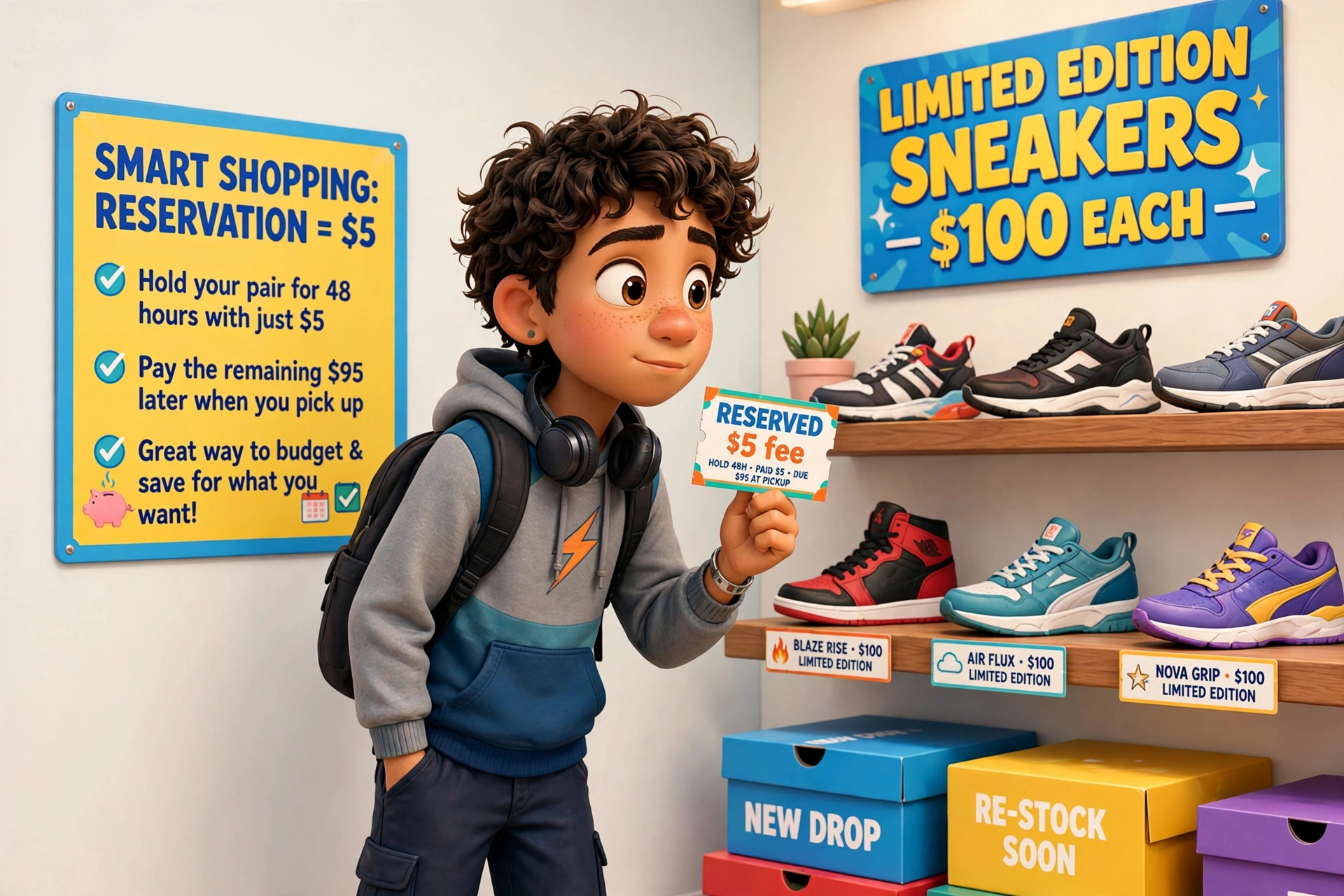
Story 1: The $100 Sneakers
You see limited sneakers for $100 at the store. You don't have $100 today, but you have $5. You ask: "Can I pay $5 now to reserve the right to buy them at $100 any time in the next 30 days?"
The store says yes. That $5 is called Premium. The $100 is Strike. The 30 days is Expiry. The sneakers are Underlying.
- If sneakers go to $150 — you still buy at $100. Profit $50 - $5 = $45.
- If they drop to $70 — you walk away. Loss only $5 in red.
That contract for $5 is a Call Option. CALL = right to BUY.
Story 2: The House — CALL vs PUT
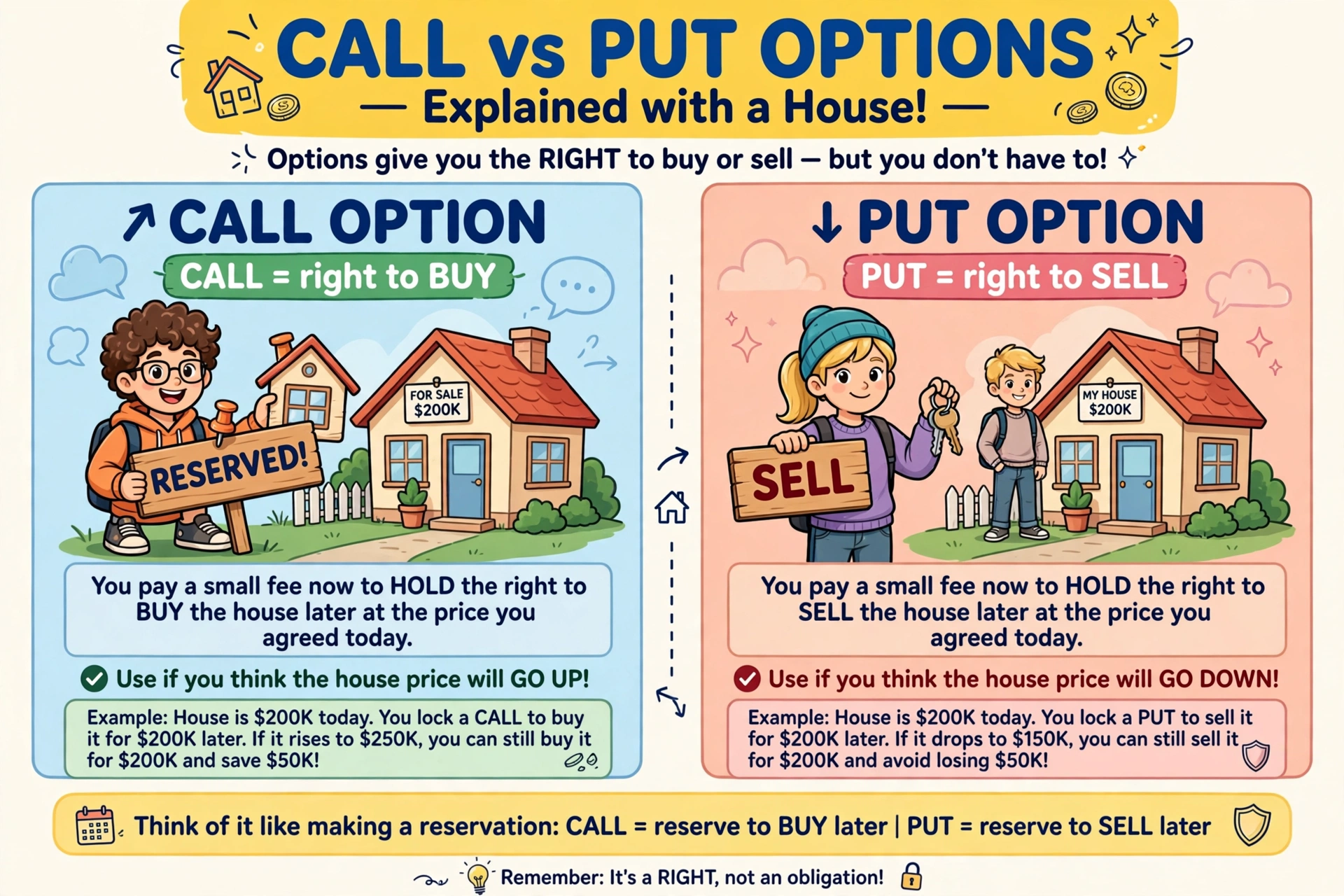
CALL: Pay small fee now to lock right to BUY later at today's price. Good if you think price will GO UP.
PUT: You own a house worth $200k. Pay fee to lock right to SELL at $200k later. If market crashes to $150k, you still sell at $200k. Good if you think price will GO DOWN.
Story 3: Concert Tickets
Taylor Swift tickets $200 today, concert in 30 days. You pay $20 to reserve right to buy at $200. That's a Call with 30-day expiry.
If resale goes to $400, you buy at $200, sell at $400 = +$180. If resale drops to $100, you let it expire. Loss $20 in red.
Expiry = date your ticket dies. After expiry, worth $0.
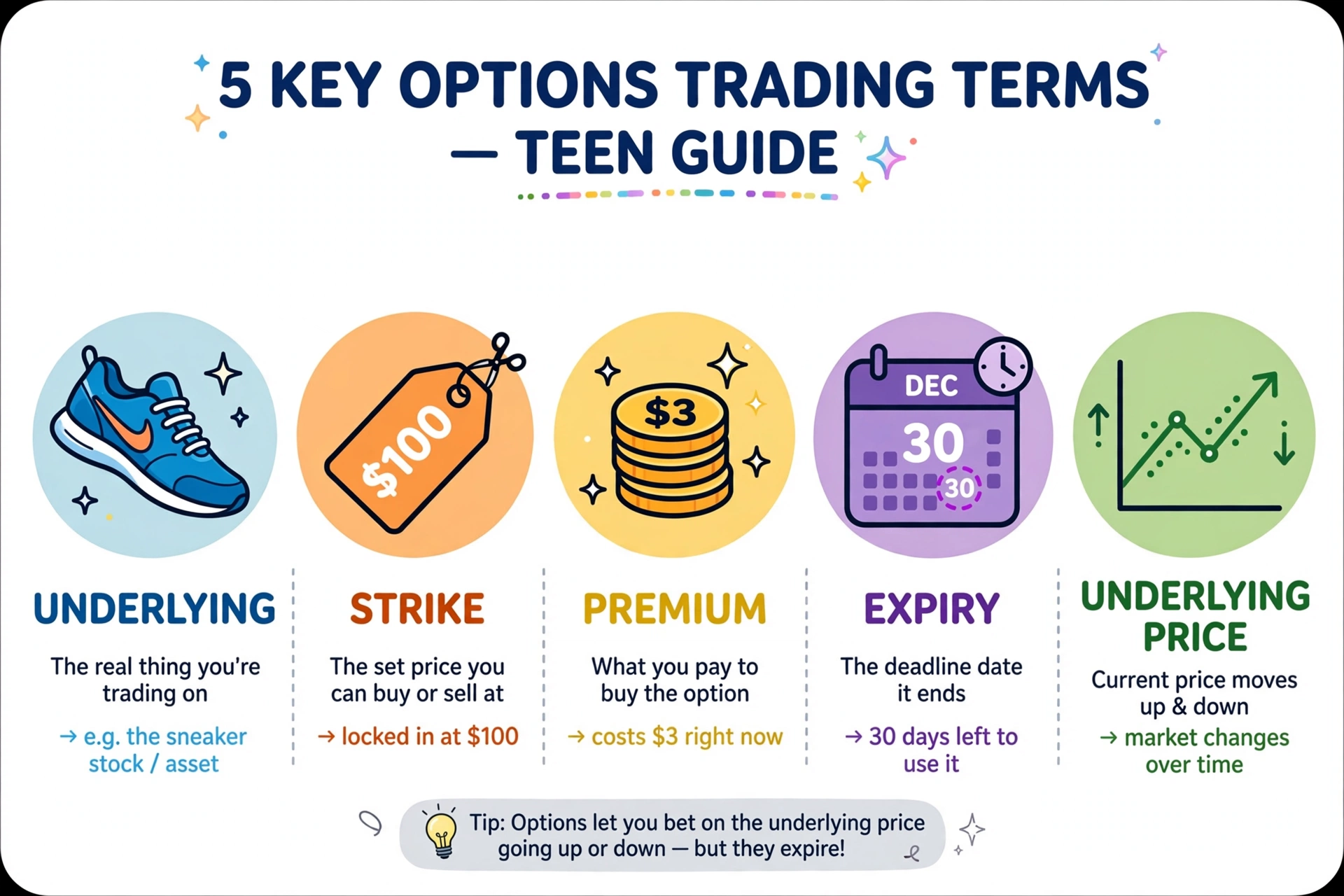
The 5 Words You Must Know
- Underlying: The real thing — Apple stock, Bitcoin, or those sneakers.
- Strike: Agreed price — "I can buy at $100 no matter what."
- Premium: What you pay now — $3, $5. Max loss in red if trade fails.
- Expiry / DTE: Deadline — how long reservation lasts.
- CALL vs PUT: Call = right to BUY (bullish), Put = right to SELL (bearish).
Long = Buy, Short = Sell. "Long Call" = you bought a Call.
How You Make Money — Payoff Picture
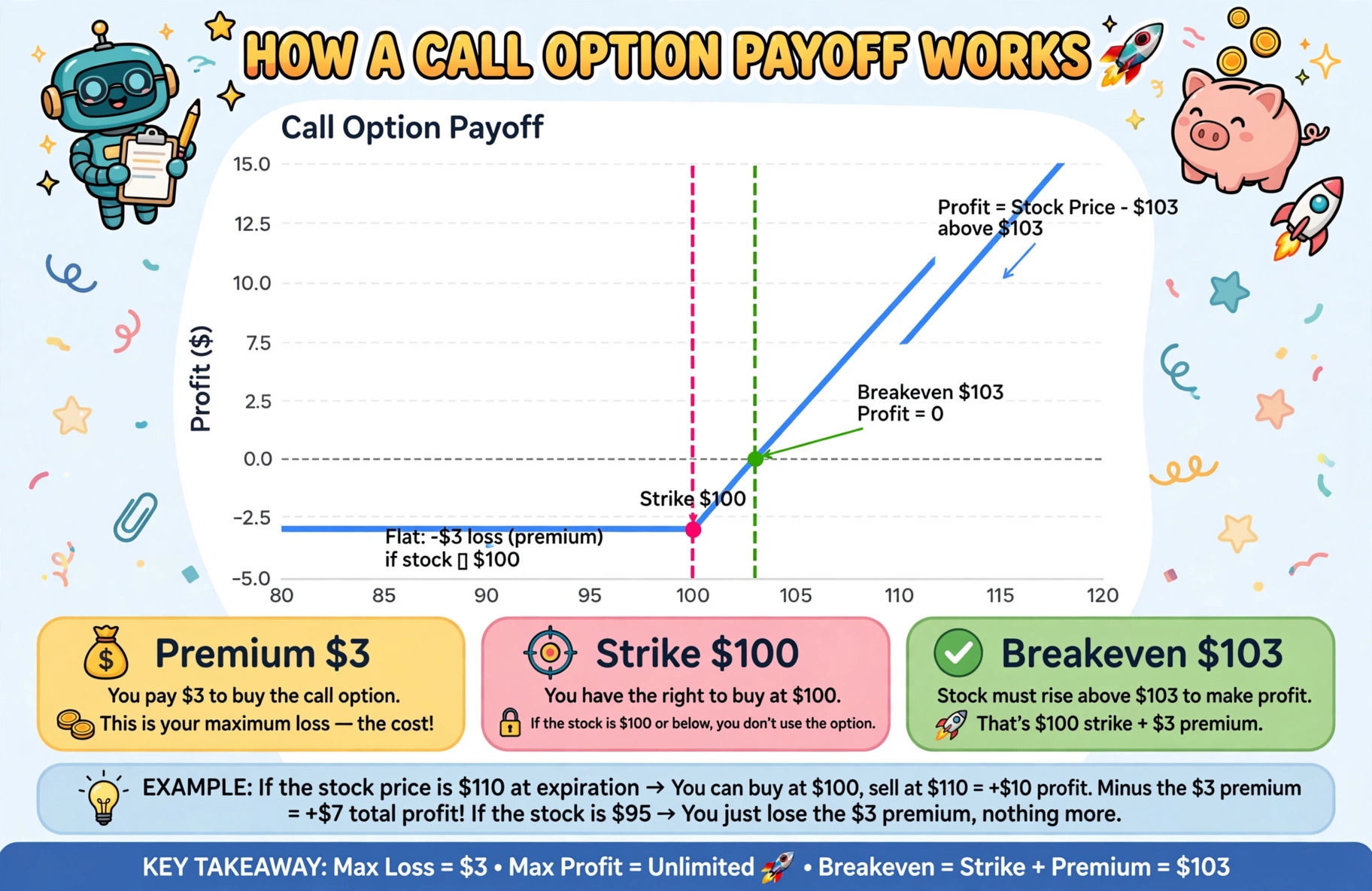
Read it: Flat line at -$3 red = loss if below $100. At $100 Strike, it rises. At $103 (Strike+Premium) you break even. Above $103 — green profit, unlimited.
Ready for Level 2?
Now you know CALL vs PUT, Strike, Premium, Expiry. Next: first real trades.
Go to Level 2 → Or jump to Builder